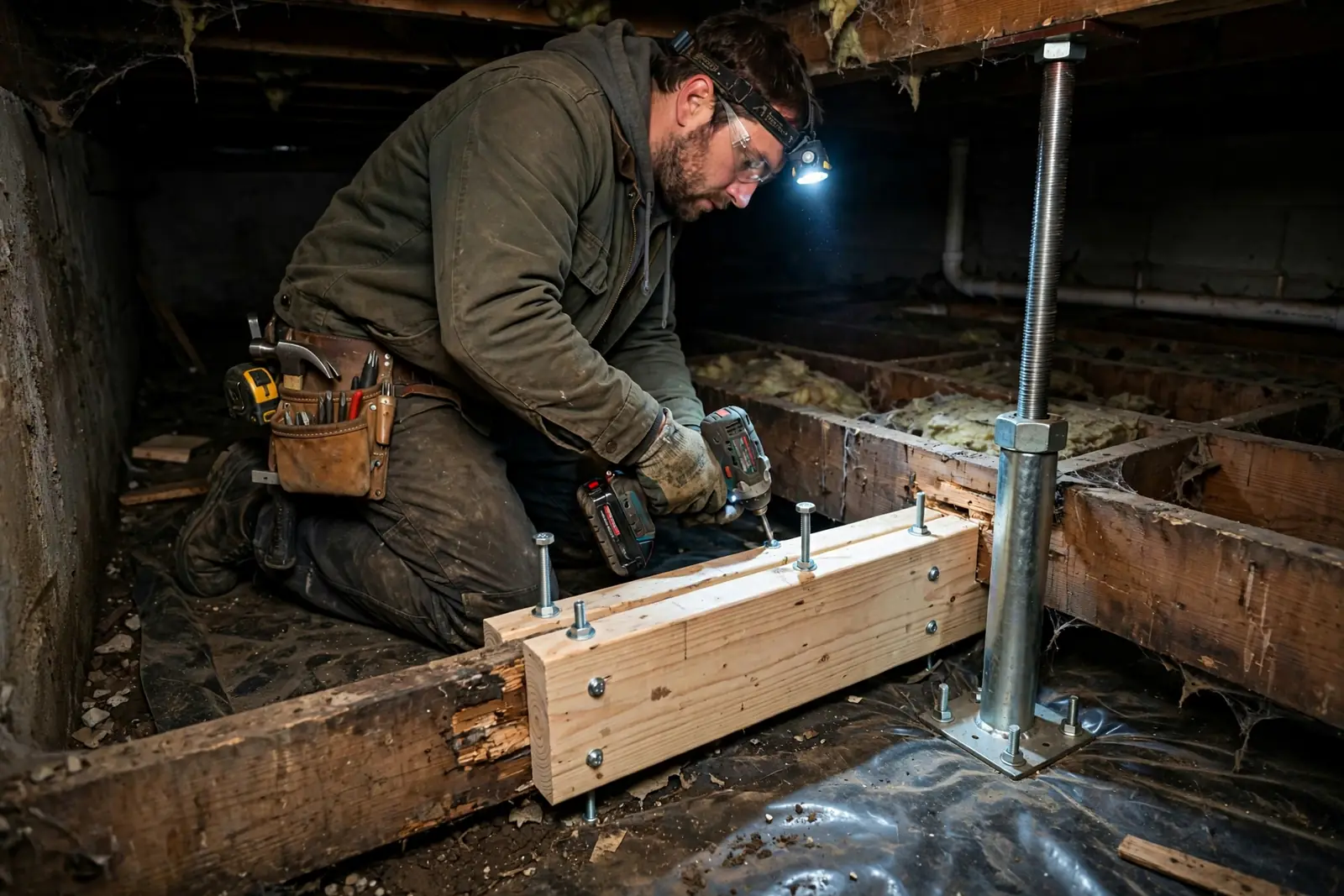
A floor that bounces. A door that used to latch and now sticks. A marble that rolls toward the middle of the room on its own. These are structural symptoms, and they start in the crawl space, where the wood and masonry holding your house up are quietly losing the fight against moisture and time. Hoover's damp crawl spaces and Shelby County clay are hard on framing: decades of humidity cycles soften joists, settle piers, and rot sill plates from below. Crawl space repair in Hoover, AL is carpentry done in a confined space, and this page covers what fails under local homes and how we fix it.
Call (205) 208-7286 or get a free inspection. We measure before we quote, and we answer our own phone, not a call center.
Structural problems announce themselves upstairs first. One stuck door is a door problem. Three stuck doors plus a sloping floor is a support problem.
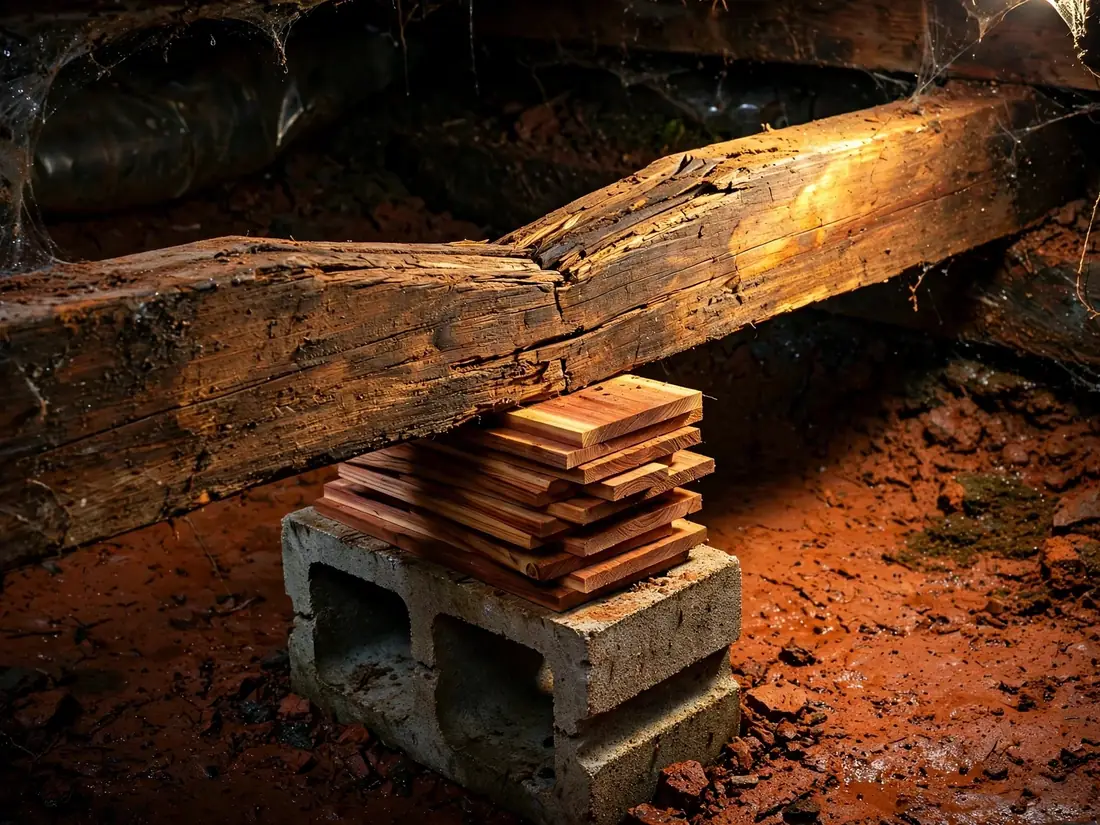
A bouncy floor means joists have lost stiffness. A sloped floor means a support has settled or failed. Try the marble test: set one down and watch which way it picks up speed. Floors do not develop opinions; they report what the framing underneath is doing.
Interior doors that stick. Drywall cracks running diagonally from door corners. Windows that bind in their frames. Each one is the house shifting on supports that are no longer where they were built to be. The pattern matters more than any single symptom, and we read the pattern before we price anything.
Joists you can push a screwdriver into. Subfloor dark and punky around plumbing penetrations, where decades of small leaks went unnoticed. Piers tilted or sunk into soft Shelby County clay that never fully dries. Sill plates rotted where moisture wicked up from the block. None of this is rare in Hoover, and none of it improves with time.
Wood does not fail on its own. It fails in crawl spaces that run damp for years: open vents, failed ground cover, humidity that never drops. Repairing the structure without addressing the moisture starts the same decay cycle on new wood. We scope both together, always.
Real carpentry, done from below, in a confined space. Here is what each repair actually involves, in plain language.
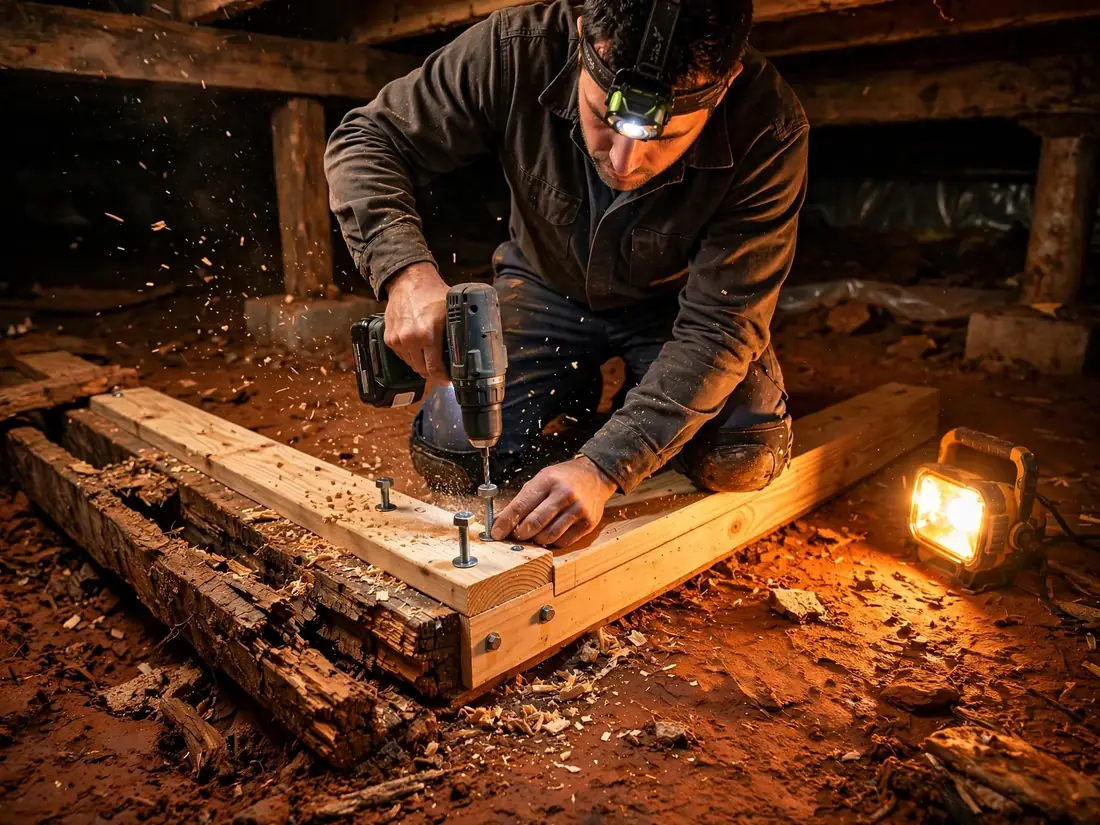
Fastening a new joist alongside a damaged one so the new wood carries the load. We run the sister the full span wherever access allows, with construction adhesive and through-bolts, not nails alone. Where a joist is notched for plumbing, the sister restores the depth the notch removed. Where the ends are rotted at the bearing, we extend past sound wood. Our most common structural repair, and the one that fixes most bouncy floors.
A failed pier gets replaced, not patched. We excavate to solid soil, pour a proper concrete footing, and build the new pier with full girder bearing. Where floors have sagged between existing piers, we add supplemental piers at proper spacing. Every new pier gets a real footing, because a pier without a footing is just a future repair.
When subfloor has rotted around a toilet flange or tub drain, we cut back to sound wood, which always means going further than the visible damage. Patching over soft subfloor with a second layer is the shortcut we refuse: two layers over a rotted base still flex, and the tile above cracks again within a year.
The sill plate is the first wood in the house and the first to rot when moisture wicks up through the block. Repair means supporting the wall, removing the damaged section, and installing new pressure-treated lumber with a proper moisture break between wood and masonry. We see this most where exterior grade sits high against the foundation, holding water right at the wood line.
Structural repair is priced by scope, on top of moisture control. Repair costs vary more than encapsulation costs because every old house is different: a few sistered joists and a re-shimmed pier is a modest addition, while a full sill plate replacement around two sides of the house is a real project.
What drives your number: how many joists need sistering, how many piers have failed, how far the rot has traveled, and how tight the access is. Then the moisture scope on top: sealing and dehumidification go in with the carpentry, because new wood in a wet crawl space starts the same decay cycle the old wood just finished.
We will stage work across visits when a budget requires it. We will not sign off on a structural repair while the moisture problem that caused it is still running. That is how you pay for the same repair twice. Every line itemized before we start. Call (205) 208-7286 for the free inspection that prices it.
HOW A JOB RUNS
Inspection first, always. The scope follows the evidence.
01
The free inspection comes first. Level survey across the framing, wood probing, moisture readings, pier and sill check. We find what is failing and what caused it before we price anything.
02
Photos of everything, findings in plain language: what is urgent, what can wait, what does not need doing. You see the readings on the meter, in your own crawl space.
03
Every repair line itemized and signed before work starts: sistering, piers, subfloor, moisture scope. No bundled mystery numbers, no change orders by surprise.
04
Structural repair done from below while the space is open, then the sealed, dry environment that keeps the new wood sound for decades. Contained work area, photographed when we are done.
Straight answers about crawl space repair in Hoover, AL.
The marble test is a start, but the real answer comes from measuring. On inspection we run a level survey and probe the wood. Uniformly uneven floors are usually just old. Localized drops, bounce, or wood you can dent with a screwdriver need repair. We show you the readings so you decide on evidence, not on our say-so.
In almost every case, yes. Sistering, pier replacement, and subfloor repair are all done from inside the crawl space. The floor above stays intact. The only thing that comes out through the house is us, at the end of the day.
They should be scoped together. Structural work happens first in the sequence, while the space is open, and moisture control follows in the same project. Doing structure now and encapsulation "someday" leaves new wood in the same damp conditions that destroyed the old wood.
Most policies exclude damage from long-term moisture, rot, and settling, which covers the majority of crawl space structural failures. We document our findings with photos and measurements, which is what an adjuster needs.
Then we find it at inspection and price it in the open. Where wood has rotted structurally, removal means cutting it out and replacing it. The itemized plan shows you exactly which framing is affected before you sign anything.
A few sistered joists and a pier can be a day or two. A full sill plate replacement around two sides of the house is a real project and runs longer. We give you a real schedule at the inspection.
The sealed system that protects repaired framing for decades. Dry wood stays strong. Seal the system
When decades of damp have grown more than softness. Remove it first
Wall insulation for sealed spaces, done to code, protecting the repaired assembly. Insulate it right
Looking at the whole picture? See all eight crawl space services.
FREE INSPECTION
The longer a sagging girder sits, the more the floors above conform to the sag, and the harder the correction becomes. We will come out, measure what is actually happening under your house, probe the wood, and give you a repair scope based on readings, not guesses.
Call (205) 208-7286 for a free inspection. We serve Hoover and the Birmingham metro, and we answer our own phone.
