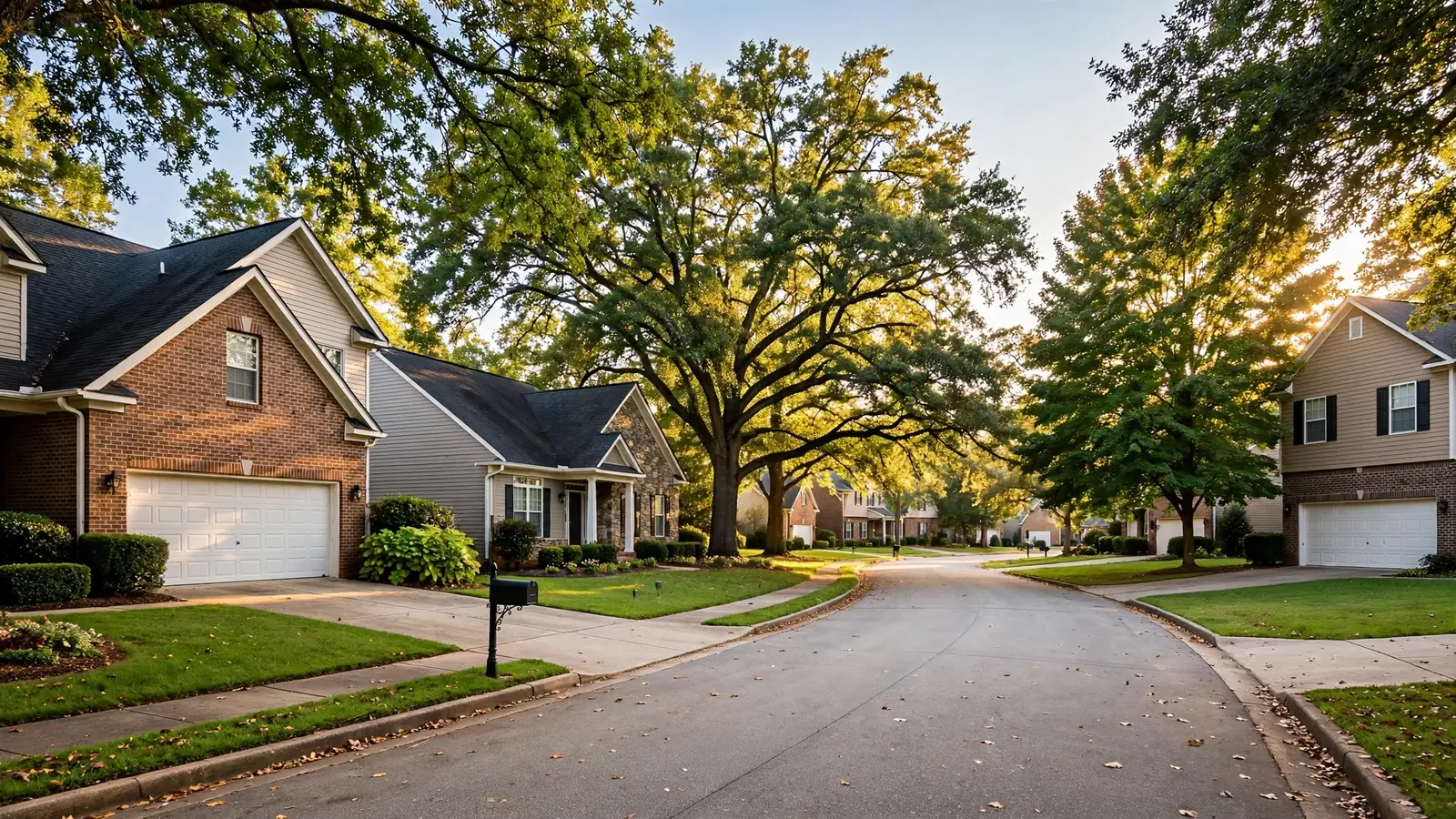
Alabaster is two cities in one, and we mean that as a crawl space contractor. Near old town and the Siluria side there are small mill-era homes from the 1930s through the 1950s: low crawl spaces, old block piers, eighty years of moisture history. Fifteen minutes away there are 1990s and 2000s brick homes with builder-grade vapor barriers quietly failing on schedule. Crawl space encapsulation in Alabaster, AL means scoping to the house you actually have, not the average house in your zip code.
Same zip code, different century, different job. The mill-era homes near old Alabaster need structural attention and patience: low clearance, original block piers, decades of deferred maintenance. The subdivision builds need a cleaner kind of work: the failed liner out, drainage corrected, a real sealed system in. Quote both the same number over the phone and one of those homeowners is overpaying.
Mill-era and mid-century homes near old Alabaster and Siluria sit low, sometimes barely two feet of clearance, on original block piers with sills that have seen eighty years of moisture cycling. Nobody wants to belly-crawl under there, so nobody has, which means decades of deferred maintenance. Access costs more here, and we price that honestly upfront. The good news: these homes were built with real full-dimension lumber, and when the damaged pieces are replaced and the moisture is controlled, they are solid for decades.
The 1980s-onward subdivisions tell a different story: builder-grade 6-mil poly now torn and displaced, open vents, humidity climbing every summer. Bigger homes, better access, usually sound framing. The job is cleaner: remove the failed liner, correct the drainage the builder skimped on, and install a real sealed system. Most of these homes never needed structural work. They needed their moisture problem taken seriously.
A 1940s mill-era home with low clearance and settled piers and a 2005 subdivision home with a shredded liner are different jobs with different scopes, timelines, and prices. Any company that quotes both the same number over the phone is quoting the average. We do not quote over the phone. Every job starts with the free inspection and an itemized plan scoped to the house you actually have.
mill-era homes, low clearance, original piers, structural focus.
small older homes, decades of moisture history, careful access work.
mid-century stock, mixed conditions, inspection-led scoping.
newer subdivisions, builder liners aging out, downspouts and grading checked.
1990s-2000s builds, failed builder poly, usually clean re-line jobs.
FIELD CHECK
Two housing stocks means the first question is always the same: which house do you have?
Pre-1970 in Alabaster usually means pier-and-beam or early block with low clearance and real structural history. Post-1980 usually means a builder liner story. The age sets the inspection priorities.
If the answer is no, access drives the labor. Low clearance makes the work slower and more expensive, and we price that honestly upfront. It does not prevent a proper repair or encapsulation.
Builder-grade poly fails on schedule, usually by year twenty. If it is torn, bunched, or buried under dirt, the ground vapor protection is gone and the space has been vented to Alabama humidity ever since.
If any of this sounds familiar, get a free inspection.
Crawl Space Encapsulation: the sealed system for both housing stocks, scoped to the house you have.
Crawl Space Repair: piers, sills, joists, subfloor, the structural work the older stock often needs.
Crawl Space Drainage & Sump Pumps: drainage where the water demands it, priced per linear foot.
Every area we serve: the full Birmingham metro from our Hoover base.
Usually, yes, with repair. The mill-era homes were built with real full-dimension lumber, and most of what we find is repairable: settled piers, rotted sill sections, tired joists. These are maintenance items on an eighty-year-old house, not condemnation items.
Yes. Low clearance makes the work slower and more expensive, and we price that honestly, but it does not prevent a proper repair or encapsulation. What we will not do is tell you the access makes a real fix impossible and sell you a surface treatment instead.
Because the builder's vapor barrier was a fifteen-year product and it is now past twenty. Thin poly tears underfoot, seams shift open, and open vents have been condensing humid air on your framing every summer since the house was built.
Structure first, always. Sealing over damaged framing hides the problem and makes future repair more expensive. We scope the structural repair and the moisture control as separate phases and do the work in the right order.
Full encapsulation runs 3,500 to 7,000 dollars in published local ranges, and structural repair gets priced on top according to scope. The older homes trend higher on labor because of low clearance but lower on materials because the footprints are small. Your number comes from the inspection.
Yes. Old town, Siluria, the Montgomery Highway corridor, and the newer subdivisions are all in our service area. Tell us your street when you call and we will tell you what we usually find in that part of the city.
FREE INSPECTION
Whether your home is a mill-era original or a subdivision build, the crawl space under it has a story, and the only way to read it is to get under there with meters and a camera. Call (205) 208-7286 for a free inspection. We're based in Hoover and serve Alabaster and the rest of the Birmingham metro. We'll document everything with photos, price every line item separately, and give you a straight answer scoped to the house you actually have. Then the decision is yours.
