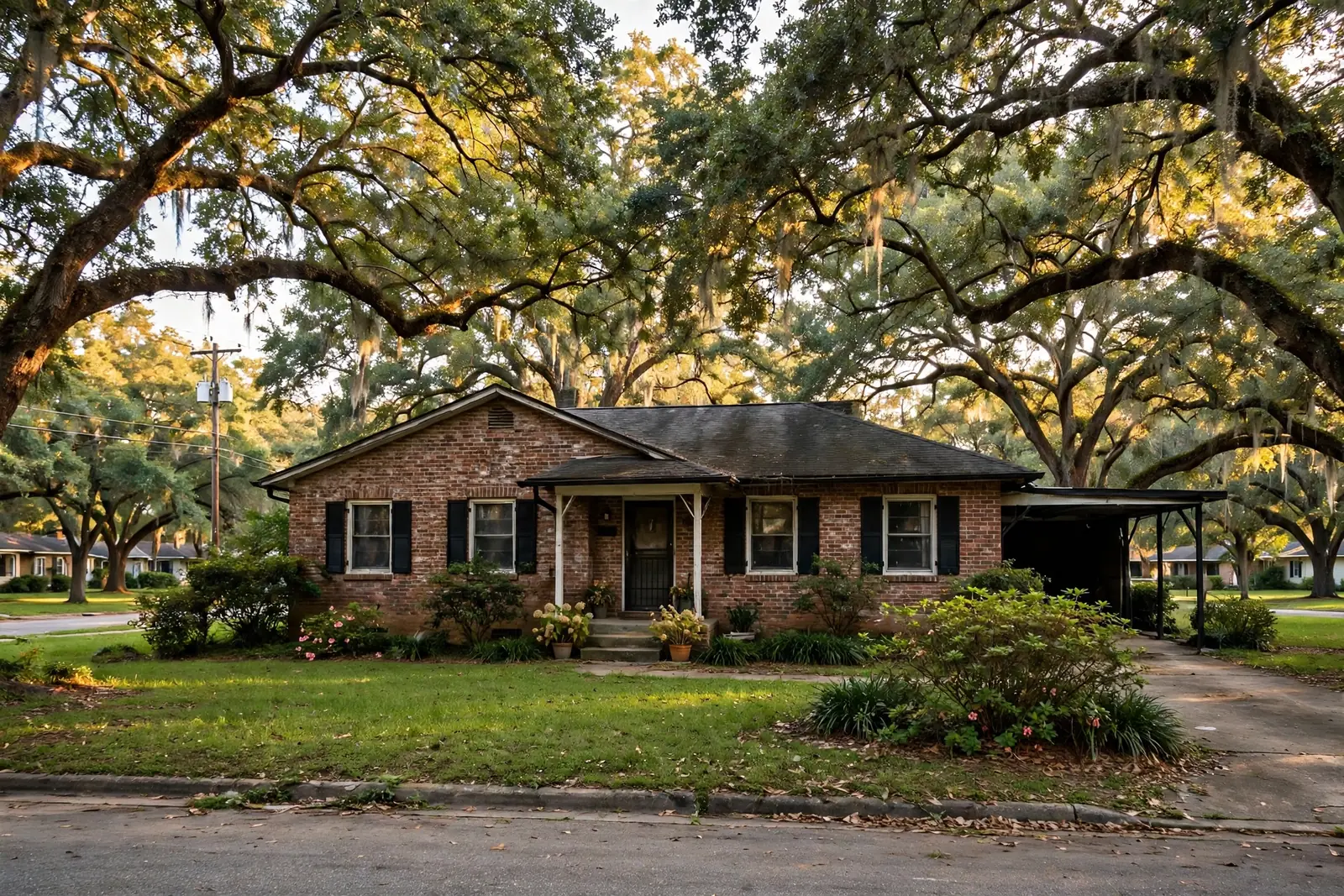
Homewood turned one hundred this year, and its crawl spaces show every decade of it. The Hollywood district, Edgewood, Rosedale, and Forest Brook are full of 1920s through 1960s homes on pier-and-beam foundations, where you can see the original craftsmanship in the framing right next to what decades of Alabama moisture did to it. Crawl space encapsulation in Homewood, AL is structural triage done right: fix what the house needs to stand straight for another fifty years, seal what needs sealing, and never sell work the house does not need.
Pier-and-beam is a durable system, and most of what we find in Homewood is repairable. But there is one order of operations that matters more here than anywhere else in the metro: structure first, seal second. Sealing a crawl space over damaged framing locks the problems in where you cannot see them, and makes future repair more expensive, since the liner has to come up.
Every summer, humid air pours through the foundation vents and condenses on the cooler framing. Every winter, the cycle eases. Year after year, joists and beams absorb and release moisture. The first sign is usually a springy hallway floor or a soft spot near the tub. A liner alone will not fix wood that has been cycling like this for decades. That is structural damage, not a humidity problem, and it needs repair before sealing.
The sill plate is the most punished piece of wood in the house. In older Homewood homes we regularly find sills gone soft at the corners, where water wicked up from the masonry for decades. A failing sill lets the whole wall assembly settle unevenly: doors stop closing, cracks open above doorframes. We replace rotted sill sections with the wall supported, a section at a time, so the house above never moves.
Clay-heavy soils shrink in dry spells and swell when the rains return. Over decades, that cycling tilts or settles the shallow original piers these homes were built on. A pier that has dropped an inch telegraphs straight up: a low spot in the floor, a gap under the baseboard, a door that swings on its own. Resetting or supplementing piers is straightforward work that changes how the whole house feels. It is one of the most satisfying repairs we do, because the change is immediate.
1920s Spanish Mission homes, historic stock, surgical structural repair from below, with extra care around the original tile and plaster.
1930s-1940s bungalows with long-running, slow moisture damage, often first noticed as a springy hallway floor.
similar vintage, often with original vents and no real barrier, so the full moisture story is still underneath.
mid-century stock, previous repairs of varying quality that we read and credit before pricing anything new.
older streets, mixed foundations, and inspection-led scoping on every house, because no two are the same.
FIELD CHECK
On a century-old pier-and-beam home, the floor-feel questions matter most.
That is the framing talking. Bouncy floors usually mean joists that need sistering or a subfloor section that has gone soft, most often near a bathroom or the tub.
Those are the classic signs of a settled pier or a failing sill letting a wall settle unevenly. A level and a camera confirm it in minutes.
Building scientists often cite that roughly 40 percent of first-floor indoor air originates from below. That smell is almost always microbial growth in the crawl space riding the stack effect upstairs. Sealing and drying the space removes the source.
If any of this sounds familiar, get a free inspection.
Crawl Space Repair: sistering, piers, sills, subfloor. The structural work, done before any sealing, every item priced on its own line.
Crawl Space Encapsulation: the sealed system that protects repaired framing for the long haul. Once the structure is sound, the seal keeps it that way.
Crawl Space Insulation: replacing moisture-saturated insulation that has been holding water against your joists. Old, wet insulation is often what is feeding the mold.
Every area we serve: the full Birmingham metro from our Hoover base.
Usually, yes, with maintenance. Most of what we find is repairable: a settled pier here, a rotted sill section there, joists that need sistering. Full foundation replacement on these homes is rarely necessary, despite what some companies suggest.
Not before the structure is fixed. Encapsulation over damaged framing hides the problem and makes future repair more expensive, since the liner has to come up. Our rule for older Homewood homes: repair first, seal second.
It is common, but you do not have to live with it. That smell is almost always microbial growth in the crawl space riding the stack effect upstairs. Sealing and drying the crawl space removes the source instead of masking it.
No, when it is done right. Structural repair on a pier-and-beam home is surgical work from below, without touching the finished house above. The house above should look and feel exactly the same, only level and solid.
Repair costs vary more than encapsulation costs because every old house is different. A few sistered joists is a modest addition; a full sill plate replacement is a real project. You will see every line item before we start, and we will tell you what can be phased.
Call (205) 208-7286. We ask for your address, one sentence about what you are noticing, and a time that works. We show up with meters and a camera, and you get photos, readings, and an itemized plan.
FREE INSPECTION
A century-old house deserves a careful look underneath. If your floors bounce, your doors stick, or the hallway smells like the crawl space, call (205) 208-7286 for a free inspection. We're based in Hoover and serve Homewood and the rest of the Birmingham metro. We'll show you the structure with photos and readings, tell you what is urgent and what is not, and give you an itemized plan. Then the decision is yours.
