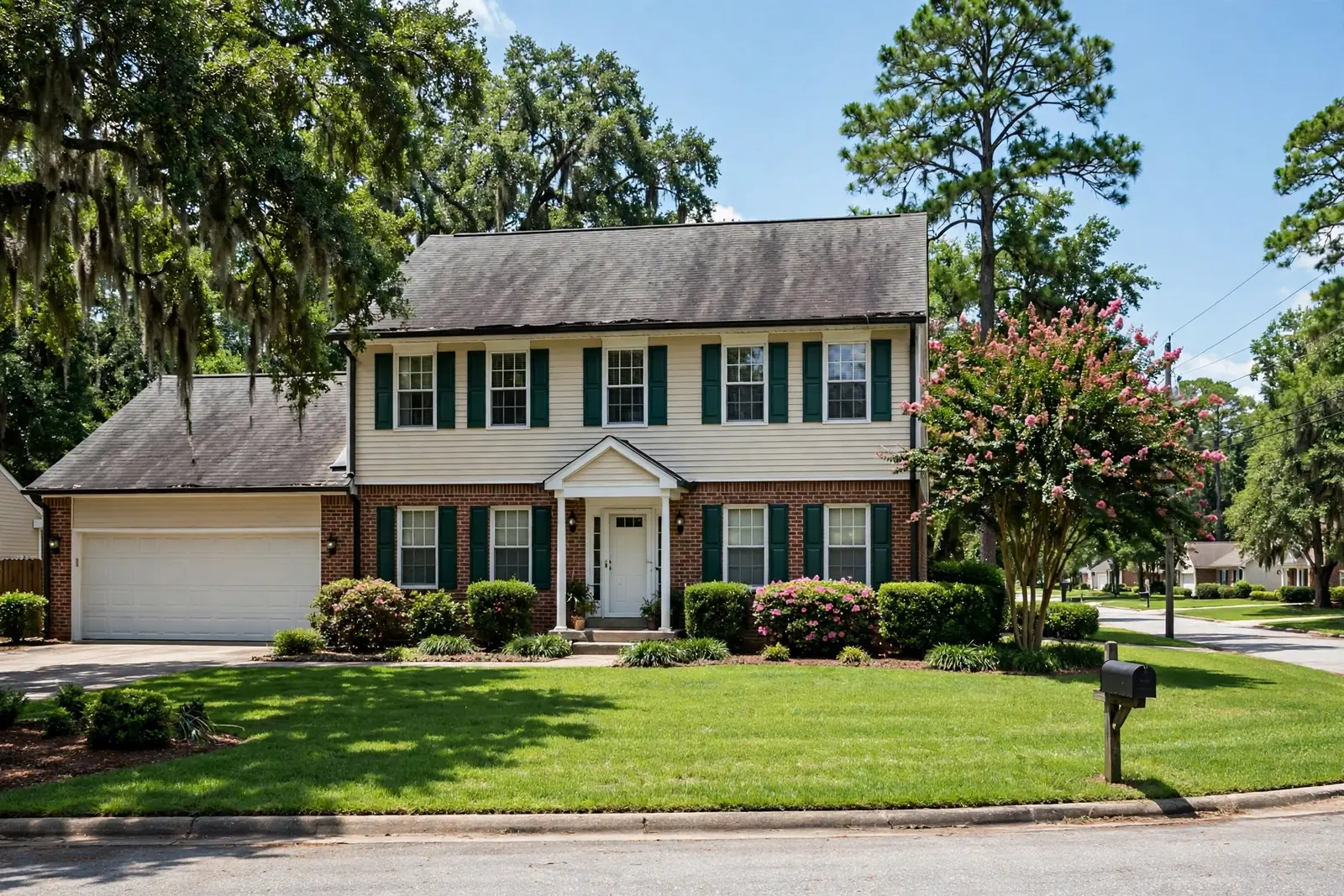
Pelham is a city that grew up fast, and its crawl spaces are showing the growing pains. Most of Pelham's homes went up during the northern Shelby County boom, in subdivisions along US-31 and the Pelham Parkway corridor. The Pelham crawl space story in one sentence: the builders of the boom years installed the cheapest vapor barrier that met code, and that barrier is now dead. Crawl space encapsulation in Pelham, AL is usually scheduled replacement of a part that wore out, like a roof at the end of its life.
Here is what we find under nearly every boom-era Pelham home: the same three failures, in the same order. The liner was thin. The seams were never sealed. The vents stayed open. Any one of those is a moisture problem. All three together is why the humidity climbs every summer and the framing pays for it. The good news: this is the most predictable crawl space story in the metro, and the fix is straightforward.
Six-mil poly tears underfoot. Every plumber, electrician, and HVAC tech who has crawled under your house since the 1980s has walked on it, kneeled on it, and dragged equipment across it. After three decades, it is confetti with gaps, and ground vapor pours through every tear. We pull the shredded poly out completely. Nothing gets sealed over.
Even where the poly survives, the sheets were overlapped, not sealed. An overlapped seam is a gap every few feet once the sheets shift, and they always shift. A vapor barrier with unsealed seams is a set of loose plastic sheets, not a barrier. Sealing the seams is half of what makes our 20-mil system a system. We seal every seam and run the liner up the foundation walls, closing the dirt-to-wall joint the builder left open.
The liner went down, the vents stayed open, and humid Alabama air has been condensing on the ductwork and floor joists every summer since. Vents plus a failed liner is the worst of both worlds: all the humidity, none of the ground protection. Sealing the vents turns the crawl space from an outdoor space into a conditioned part of the home.
1980s colonials with shredded original liners and usually sound framing: straightforward re-line jobs.
1990s brick homes with foothills drainage character, where we always check the grading and downspouts first.
mixed boom stock, where downspouts dumping at the foundation and settled grading are the usual culprits.
older scattered homes, where classic old-home structural issues sit alongside the moisture story.
2000s builds whose builder liners are reaching the end of their useful life right on schedule.
FIELD CHECK
If your home went up during the Pelham boom, the liner question matters most.
Then it almost certainly got a builder-grade 6-mil liner. That product had a fifteen-to-twenty-year life, and the clock has run out on most of them.
That is what a dead barrier looks like. But you cannot judge the whole space from the access door. We find failed liners where the first three feet look fine and the back forty feet are shredded.
Then humid summer air is condensing on your joists and ducts right now. Sealing the vents is part of every encapsulation we install.
If any of this sounds familiar, get a free inspection.
Vapor Barrier Installation: when the ground cover is the right standalone scope, installed as a sealed 20-mil system, not builder poly.
Crawl Space Encapsulation: the full sealed system, replacing the builder membrane with liner, sealed vents, and dehumidification.
Crawl Space Dehumidifiers: the engine that keeps the sealed space dry year-round, sized to the square footage.
Every area we serve: the full Birmingham metro from our Hoover base.
Yes, because you cannot judge a liner from the doorway. We find failed liners under homes where the visible three feet near the access look fine and the back forty feet are shredded. The inspection is free and the photos show you the whole space.
Three things: it was thin, the seams were never sealed, and it was never run up the walls. It was a code-minimum ground cover, not a sealed system, and after thirty-plus years it has reached the end of its useful life.
Usually, yes, noticeably in summer. A vented dirt crawl space is an open window under your house. Sealing the space and controlling the humidity cuts that load. Homeowners typically notice the comfort difference first and the bills second.
Whether your crawl space takes on liquid water decides it. Damp from vapor and humidity is a liner-and-dehumidifier job. Standing water, seepage stains, or water entry during storms means interior drainage and a sump pump before the liner. We show you which one you have.
A reinforced 20-mil sealed liner is a different product from the builder poly it replaces. Installed correctly in a drained, dehumidified space, it lasts decades, not years.
Full encapsulation in this market is published at 3,500 to 7,000 dollars. Replacing a failed liner on sound framing usually lands in the cleaner part of that work. Drainage, if your space needs it, is priced separately. Your number comes from the inspection.
FREE INSPECTION
If your home went up during the Pelham boom, so did its vapor barrier, and time has not been kind to it. Call (205) 208-7286 for a free inspection. We're based in Hoover and serve Pelham and the rest of the Birmingham metro. We'll photograph everything, show you the readings, and give you an itemized plan with a straight answer. Then the decision is yours.
