Crawl space insulation is the most misunderstood part of the whole moisture-control picture, because the right answer depends entirely on whether the space is sealed or vented, and most advice online doesn't bother distinguishing. Get it wrong and you trap moisture against your floor system, turning an insulation job into a rot job that costs ten times the insulation. Get it right and you fix cold floors, sweating ducts, and wasted energy at the source. Crawl space insulation in Hoover, AL starts with the thermal boundary, and this page explains where it actually goes: walls for sealed spaces, floor for vented ones, and the expensive mistake of mixing the two. Read it before you pay anyone to stuff batts under your house.
Call (205) 208-7286 or get a free inspection. We will tell you whether insulation is your problem or just a symptom.
Cold floors get blamed on insulation. Sometimes the insulation is the problem. Sometimes it is just the symptom of a vented, damp space. Four ways to tell.
Cold floors are the number one comfort complaint we hear, and they are caused by cold air in the vented space below. A sealed, insulated crawl space typically runs 15 to 25 degrees warmer than a vented one in January. Tile and hardwood floors show the biggest improvement; carpeted floors less so, since the carpet was already insulating you from the problem.
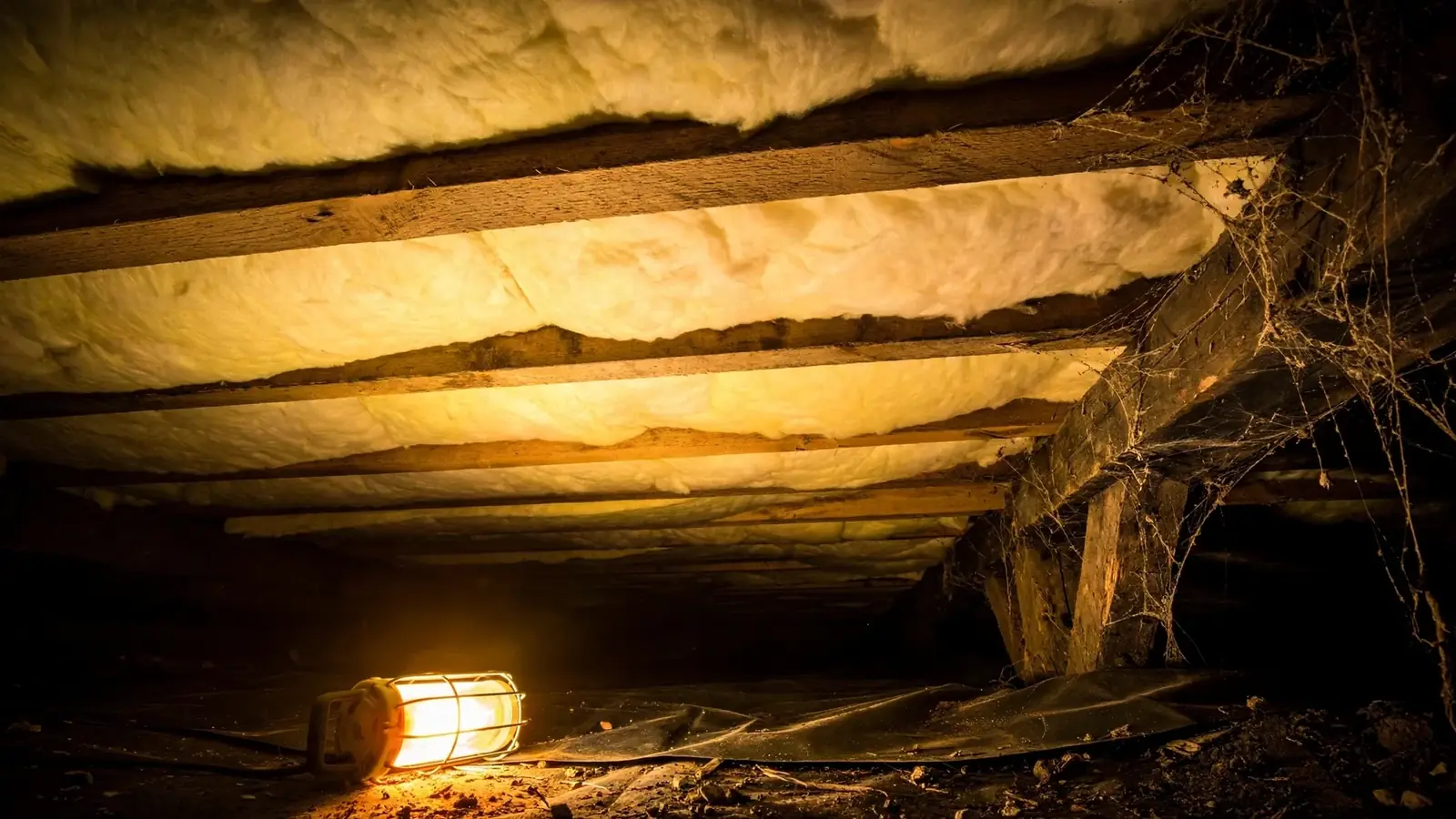
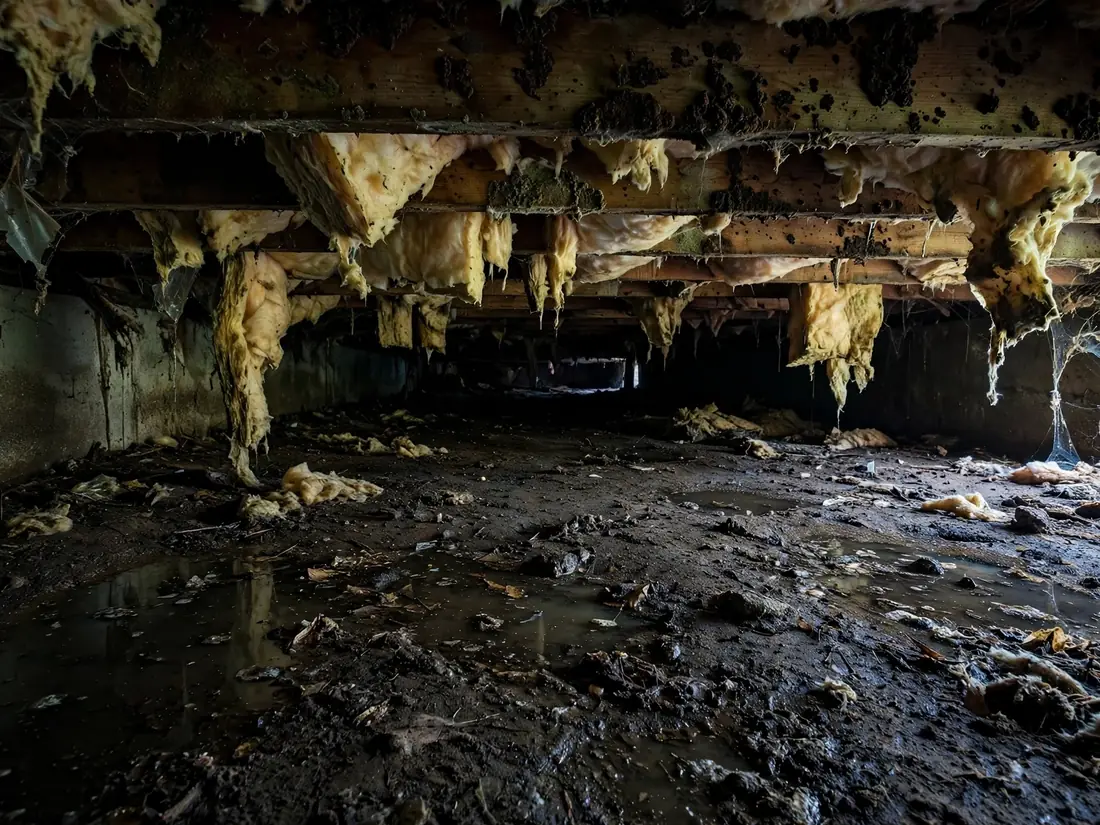
In many Hoover vented crawl spaces, the existing floor-batt insulation is saturated, fallen, or moldy. Adding new batts over that traps the problem. Often the right move is removal, moisture assessment, then fresh insulation in the right place. New batts over wet old batts is money buried in a crawl space.
Cold supply air flows through metal ducts surrounded by hot, humid air. The duct surface drops below the dew point, condensation forms, and that moisture feeds mold on the duct exterior and degrades duct insulation. Sweating ducts are a humidity verdict, not a duct verdict.
In most Hoover homes, ductwork runs through the crawl space: delivering 55-degree air through a 95-degree humid oven in summer. Sealing and insulating the space around the ducts protects the ducts more than the insulation itself does. If the bills never drop, the space is the problem.
This is the concept that unlocks everything else. Insulate the wrong boundary and you trap moisture where it cannot dry.
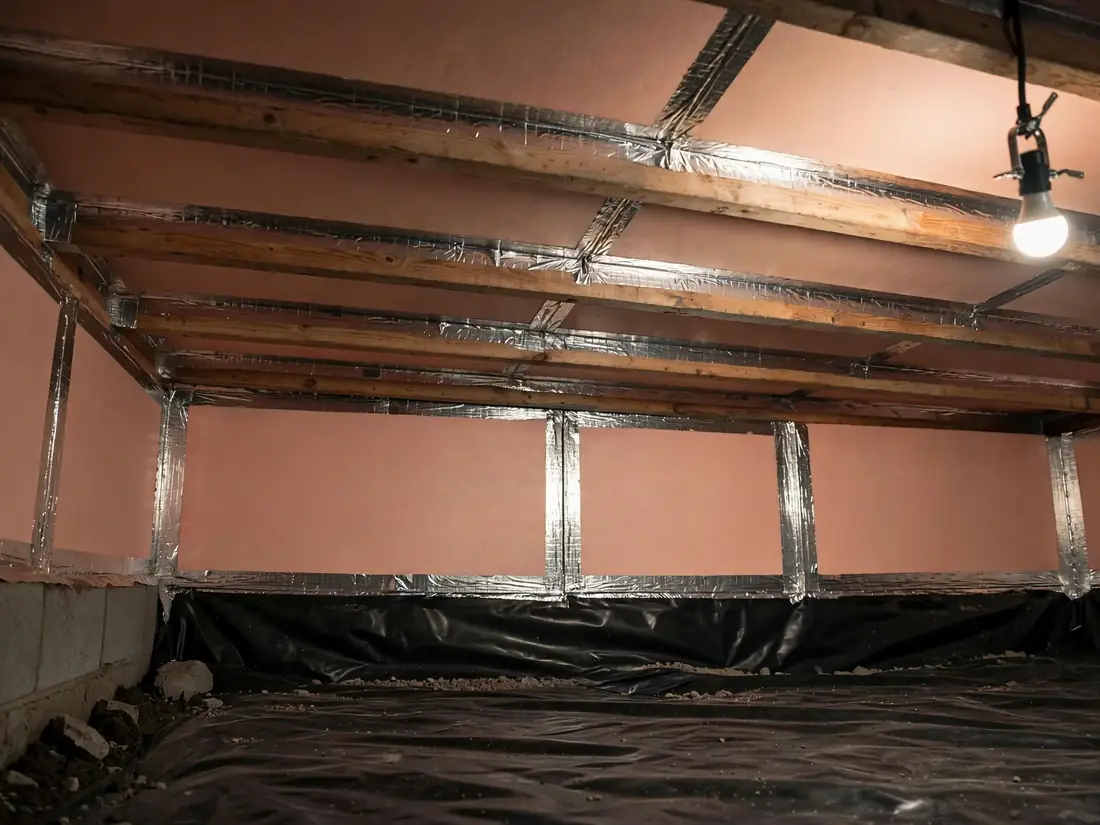
In a sealed, encapsulated crawl space, the space itself becomes semi-conditioned: it is inside the building envelope. The thermal boundary moves to the foundation walls. We install rigid foam board, typically 2-inch XPS or polyiso at R-10 to R-13, directly on the interior foundation walls, sealed at the seams. This is the correct assembly, and it meets Hoover's R-10 code requirement for sealed crawl spaces.
In a vented crawl space, the space is effectively outdoors: cold in winter, hot and humid in summer. The thermal boundary is the floor above. Insulation goes between the floor joists, batt or spray foam, with the vapor retarder facing the right direction for our climate. Wall insulation here would be wasted money on the wrong boundary.
Insulating the floor and sealing the space, or insulating walls while leaving vents open. Both create assemblies that trap moisture where it cannot dry. When we insulate as part of an encapsulation, it is always walls, and the old floor insulation comes down: leaving it creates a double vapor retarder situation that traps moisture between the layers.
Spray foam, closed-cell, gives higher R-value per inch and air-seals simultaneously: technically superior. Rigid foam board costs significantly less and performs very well when seams are taped and sealed. For most Hoover homes, rigid board is the value choice; spray foam is the premium one. We install both and quote both when asked. Do not let anyone tell you rigid board does not work. Properly installed, it is excellent.
Standalone insulation in the Hoover area typically runs $1,500 to $4,500. What drives it: linear feet of foundation wall, foam thickness and R-value, whether rim joists get sealed (they should: it is the leakiest square footage in the house), and removal of old failed insulation, which is almost always required when a space is being sealed.
As part of a full encapsulation, wall insulation is typically 15 to 25 percent of the total project cost. What you will not get from us: a quote for new floor batts in a vented space when the real problem is humidity and mold. If you are fighting moisture with a vented space, more floor insulation is treating a symptom, and we will price the cause before you decide. Rim joists, by the way, get sealed in every insulation scope we write: it is the leakiest square footage in the house.
Every line itemized before we start, with the product and R-value specified in writing. Call (205) 208-7286 for the free inspection.
HOW A JOB RUNS
Insulation assessed as part of the free inspection. The boundary decides the scope.
01
The free inspection comes first. We look at your existing insulation, your ducts, and whether the space is sealed or vented. Moisture readings decide whether insulation is the problem or a symptom.
02
Photos of everything, findings in plain language: where your thermal boundary is, what is failing, and the honest verdict on whether insulation alone fixes anything.
03
Product, R-value, location: walls or floor, specified in writing. Removal of failed material included where needed. Itemized and signed before work starts.
04
Walls for sealed spaces, floor for vented ones, sealed at the seams, code-compliant R-value. Old failed material out first, rim joists sealed. Photographed when we are done.
Straight answers about crawl space insulation in Hoover, AL.
You can, but check what is already there first. In many Hoover vented crawl spaces, the existing floor-batt insulation is saturated, fallen, or moldy, and adding new batts over that traps the problem. And be honest about whether the vented assembly is serving you at all: if you are fighting humidity and mold, more floor insulation is treating a symptom.
Spray foam, closed-cell, gives higher R-value per inch and air-seals simultaneously: technically superior. Rigid foam board costs significantly less and performs very well when seams are taped and sealed. We install both and quote both when asked.
Yes, noticeably. A sealed, insulated crawl space typically runs 15 to 25 degrees warmer than a vented one in January. Tile and hardwood floors show the biggest improvement.
Almost always yes. Old floor-batt insulation in a space being sealed is in the wrong location for the new thermal boundary, and it is usually moisture-damaged anyway. We include removal in every encapsulation quote.
Hoover is in IECC Climate Zone 3, where the code prescribes R-10 continuous insulation on foundation walls for sealed crawl spaces. We typically install 2-inch XPS (R-10) or 2-inch polyiso (R-13), specified in writing on your quote.
Field studies commonly cite around 15 to 18 percent HVAC energy savings from a sealed, insulated crawl space versus a vented one. But be skeptical of bigger claims: if someone quotes you savings of 30 to 40 percent, ask for the study.
The sealed system insulation belongs to. Walls, liner, dehumidifier, one scope, done right. Get the full system
Soft framing gets rebuilt before it gets insulated. Structure first, always. Fix the structure
The ground-vapor component of the sealed system. Sealed seams, wrapped piers. Lay a real barrier
Looking at the whole picture? See all eight crawl space services.
FREE INSPECTION
Our free inspection looks at your insulation, your ducts, and your thermal boundary, and tells you honestly whether insulation is your problem or just a symptom. The inspection is free, the findings are yours to keep, and there is no pressure either way, ever.
Call (205) 208-7286 to schedule. We serve Hoover and the Birmingham metro, and we answer our own phone.
