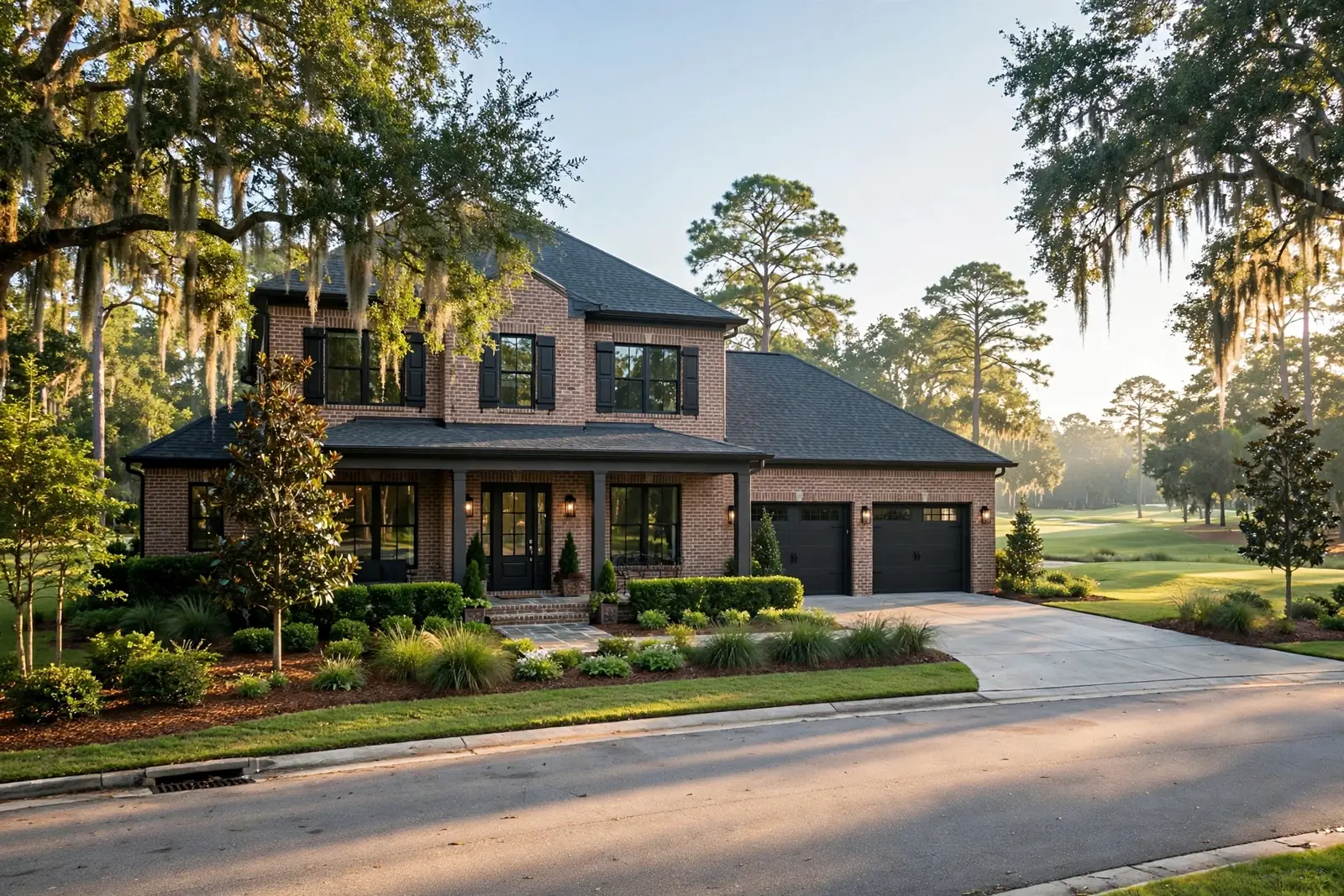
Mountain Brook is the shadiest city in the Birmingham metro, and we mean that as a crawl space diagnosis. The mature tree canopy over Cherokee Bend, Crestline, and Belle Meade is beautiful, and it keeps the ground under these homes damp for most of the year. Crawl space encapsulation in Mountain Brook, AL starts with that canopy, because sunlight never fully reaches the soil around the foundation, and the water has to go somewhere.
Most crawl space advice is written for small ranches on open lots. Mountain Brook is neither. The moisture load here comes from the canopy keeping the soil near saturation, leaf litter working against the vents every fall, and footprints big enough that the square footage itself changes the scope. A dehumidifier sized for a 1,200 square foot rancher will run constantly and die young under a 3,000-plus square foot footprint.
A lot under mature oaks and pines stays cooler and damper than an open lot. The soil around the foundation never bakes dry in summer, so the ground is already near saturation when the next storm arrives, and the excess goes sideways, against your foundation. Chronic damp beats seasonal damp here, and the crawl space never gets a dry month to recover.
Every fall, leaves pack against foundation vents and along the foundation wall. Wet leaves hold moisture directly against the masonry for months. We pull literal compost out of vent wells here every autumn. The vents were a bad idea in this climate to begin with. Packed with wet leaves, they are a moisture delivery system.
The Tudor Revival homes of the 1930s and 1940s, the 1960s brick homes, and the larger custom homes on wooded lots share one trait: big footprints. A 3,500 square foot home has a 3,500 square foot moisture load under it. Waterproofing and dehumidification at this scale have to be scoped like it, not priced like a small house.
creek corridors and low pockets, higher water table, quicker to recommend drainage where evidence supports it.
established stock, mixed foundations, canopy moisture throughout.
wooded lots, leaf litter at the vents, exterior water management matters.
older streets, decades of damp, careful sill checks.
Tudors with big footprints and big moisture loads.
FIELD CHECK
Under a mature canopy, chronic damp beats seasonal damp, and this check catches both.
If the sun never reaches the soil around your foundation, the ground stays near saturation year-round, and your crawl space never gets a dry season. Sealed vents and a properly sized dehumidifier do the work the sun cannot.
Wet leaf litter holds moisture directly against the masonry for months. It is also a sign your vents are acting as moisture intakes. We clear them during the inspection and seal the vents as part of the system.
Then your moisture load is large too. Drainage gets priced per linear foot and the dehumidifier gets sized to the actual cubic footage. Anything less is a catalog guess that fails quietly.
If any of this sounds familiar, get a free inspection.
Crawl Space Dehumidifiers: sized to the actual cubic footage, because a sealed Alabama crawl space needs one.
Crawl Space Encapsulation: the sealed system on top of managed water, at the right scale.
Crawl Space Mold Removal: when decades of canopy damp have grown more than softness.
Every area we serve: the full Birmingham metro from our Hoover base.
It helps the yard dry, but it will not fix the crawl space. The moisture load comes from ground vapor, humidity, and water against the foundation, and the vents have been condensing humid air on framing for decades. Tree work is good property maintenance. The crawl space still needs its own project.
Often, yes. Creek-adjacent lots and low pockets live with a higher water table, which means more hydrostatic pressure during wet seasons. We check for water entry history carefully and are quicker to recommend interior drainage and a sump where the evidence supports it.
If your crawl space takes on water during storms, yes. Alabama storms knock out power, and a sump without power during the storm that floods your crawl space is decoration. Where the sump is insurance rather than necessity, we will say so and let you decide.
Yes, and we scope them as one system. Moist air and water move between the two spaces, so treating only the crawl space leaves the problem half solved. It costs more than a crawl-space-only job, and it is the only approach that actually works on combo homes.
Interior drainage is priced per linear foot, so a large footprint costs more than a small rancher for the same system, and that is correct: more drain, more stone, more labor. Sump systems, backup, and exterior drainage are separate line items. Your number comes from the inspection.
Usually within a few days. Call (205) 208-7286 with your address and one sentence about what you are seeing. Active water intrusion gets priority anywhere in the metro.
FREE INSPECTION
A big footprint under a mature canopy is a big moisture load, and the only way to scope it correctly is to get under the house and measure. Call (205) 208-7286 for a free inspection. We're based in Hoover and serve Mountain Brook and the rest of the Birmingham metro. We'll document everything with photos and readings, price every line item separately, and give you a straight answer. Then the decision is yours.
